
Abstract
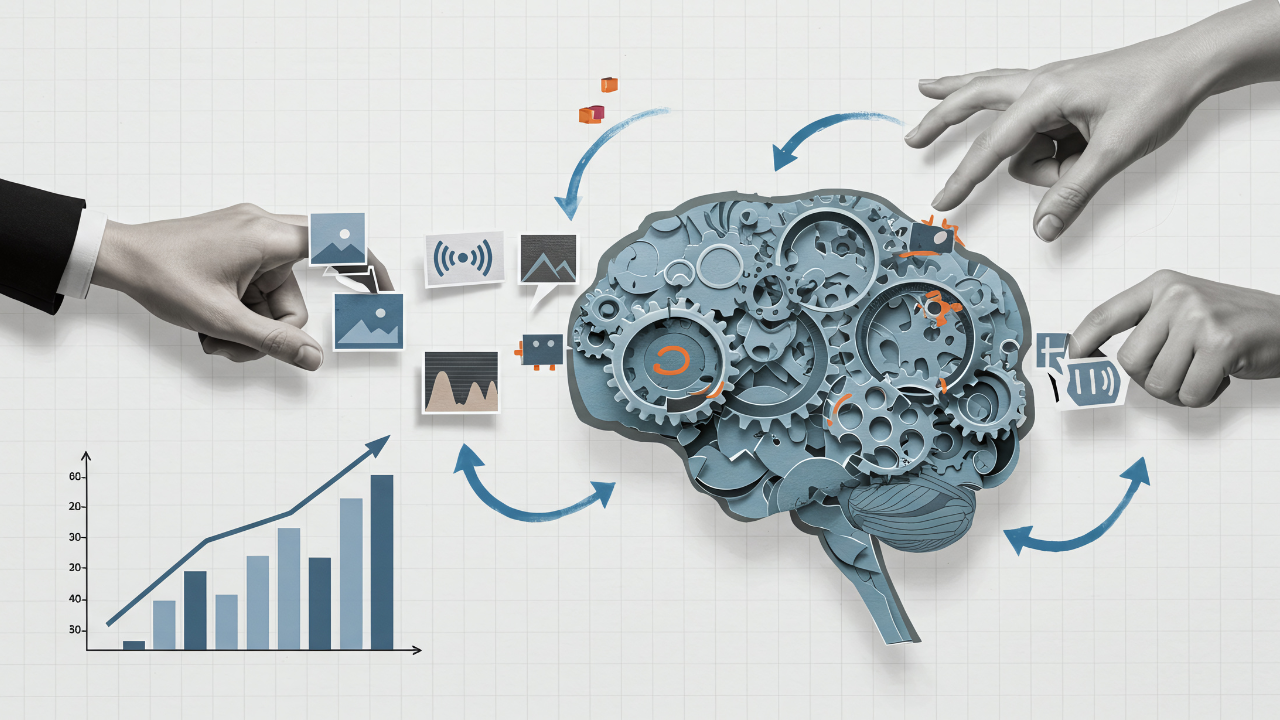
In the era of Industry 4.0 and accelerating digital transformation, industrial organizations face an unprecedented influx of operational data—from sensors, PLCs, SCADA systems, historians, ERP systems, and IoT platforms. Yet, the ability to transform this raw data into actionable insights remains the defining factor between market leaders and laggards.
This article explores the principles, technologies, and strategic applications of Industrial Data Analytics (IDA)—examining how modern plants harness data-driven intelligence to improve reliability, efficiency, and profitability. Drawing from standards such as ISA-95, ISO 14224, and IEC 62264, as well as frameworks like Digital Twin, Predictive Maintenance, and Industrial AI, this paper aims to provide a structured roadmap for transforming operational data into strategic decisions.
1. Introduction: The Rise of Industrial Data Analytics
The industrial landscape has evolved rapidly over the past decade. Once dominated by manual reporting and reactive maintenance, today’s manufacturing and energy sectors are shifting toward data-driven operations. According to McKinsey (2023), data analytics can improve overall equipment effectiveness (OEE) by up to 20–30% and reduce maintenance costs by 15–20% when integrated effectively with operations and business systems.
However, most plants collect far more data than they can interpret. Historian databases may store terabytes of time-series data, but less than 10% is ever used for decision-making. Bridging this “data-to-insight gap” is precisely the mission of Industrial Data Analytics—the discipline of transforming raw operational data into meaningful business intelligence.
2. What Is Industrial Data Analytics?
Industrial Data Analytics (IDA) refers to the systematic process of collecting, contextualizing, analyzing, and visualizing operational data from industrial environments to support decision-making.
Unlike generic data analytics, IDA focuses on real-time, high-frequency, and context-dependent data sources typical of process and manufacturing industries.
Core Data Sources in Industrial Environments
| Layer (ISA-95 Reference Model) | Data Source | Description |
|---|---|---|
| Level 0–1 | Sensors, transmitters, PLCs | Real-time process measurements (temperature, pressure, vibration, flow) |
| Level 2 | SCADA, DCS, HMI | Supervisory control and monitoring data |
| Level 3 | MES, CMMS, LIMS | Operations management, maintenance records, and lab results |
| Level 4 | ERP, EAM, BI systems | Business and financial systems providing strategic context |
IDA integrates these layers to provide end-to-end visibility—connecting the physical world (machines and sensors) with the digital world (business decisions).
3. The Business Value of Data Analytics in Industry
Data analytics is no longer a technology experiment—it is a business imperative. The value emerges across three key dimensions:
3.1 Operational Efficiency
Real-time monitoring and analysis can identify process deviations before they become bottlenecks or quality issues.
Example: Advanced analytics on compressor vibration data can detect imbalance trends weeks before failure, avoiding unscheduled downtime.
3.2 Asset Reliability
By applying predictive algorithms (e.g., regression, anomaly detection, or neural networks), plants can transition from reactive maintenance (fixing after failure) to predictive maintenance (anticipating failure).
Reference: ISO 14224 provides standard data taxonomy for reliability and maintenance analytics.
3.3 Strategic Decision-Making
Aggregating data across multiple sites allows corporate management to optimize capital allocation, production scheduling, and risk management based on empirical insights rather than assumptions.
“Without data, you’re just another person with an opinion.” — W. Edwards Deming
4. Architecture of Industrial Data Analytics Systems
A robust IDA architecture typically consists of five layers:
4.1 Data Acquisition Layer
- Sensors and IoT Devices: Measure process parameters (e.g., vibration, flow, energy consumption).
- Data Communication Protocols: OPC UA, MQTT, Modbus TCP, and EtherNet/IP enable interoperability.
4.2 Data Integration Layer
- Historian Databases: (e.g., AVEVA PI System, Aspen InfoPlus.21) store time-series data.
- Data Lakes and Middleware: Combine structured (SQL) and unstructured (JSON, logs) data.
4.3 Data Processing and Analytics Layer
- Edge Analytics: Performs near-machine computations to reduce latency.
- Cloud Analytics: Provides scalability for large datasets using platforms like AWS IoT Analytics or Azure Synapse.
4.4 Visualization and Insight Layer
- Dashboards: Power BI, Grafana, or Tableau display key metrics (OEE, MTBF, MTTR).
- Digital Twins: Simulate plant operations for scenario testing.
4.5 Decision Layer
- Integrated into ERP, MES, or CMMS systems to support planning, maintenance, and resource allocation.
This architecture aligns with the ISA-95 enterprise-control integration standard, ensuring seamless data flow between plant floor and business systems.
5. Key Analytics Techniques in Industrial Applications
5.1 Descriptive Analytics
Answers: What happened?
Examples:
- OEE dashboard summarizing machine uptime.
- Pareto analysis of top failure causes.
5.2 Diagnostic Analytics
Answers: Why did it happen?
Examples:
- Root cause analysis using correlation between temperature and product defect rate.
- Energy consumption variance analysis.
5.3 Predictive Analytics
Answers: What will happen?
Techniques:
- Machine learning (Random Forest, SVM) for failure prediction.
- Statistical process control with anomaly detection.
5.4 Prescriptive Analytics
Answers: What should we do?
Examples:
- Optimization models for production scheduling.
- Maintenance recommendation systems based on risk prioritization.
6. Implementation Roadmap for Industrial Data Analytics
A structured implementation approach ensures success and scalability:
Step 1: Define Business Objectives
Identify key pain points such as unplanned downtime, energy inefficiency, or yield losses.
Align goals with measurable KPIs (OEE, energy intensity, maintenance cost per ton, etc.).
Step 2: Data Audit and Infrastructure Assessment
Evaluate data availability, historian structure, communication protocols, and data quality.
Apply ISO 8000 data quality principles (accuracy, completeness, consistency).
Step 3: Data Integration and Contextualization
Implement data contextualization frameworks that link tag data with equipment hierarchy (as per ISA-95 or ISO 14224 asset taxonomy).
Step 4: Analytics Model Development
- Start small (proof-of-concept) with a specific use case (e.g., pump vibration analysis).
- Use historical failure data to train machine learning models.
- Validate model accuracy using confusion matrix or ROC curves.
Step 5: Visualization and Insight Delivery
Develop real-time dashboards and automated alerts for decision-makers.
Ensure that information is actionable—avoid “dashboard fatigue”.
Step 6: Continuous Improvement and Scalability
Refine models using feedback loops.
Scale from single-asset analytics to enterprise-wide analytics.
7. Case Studies and Industry Examples
Case 1: Predictive Maintenance in Oil & Gas
An offshore platform applied anomaly detection to its compressor data using a neural network trained on five years of historian records.
Result:
- Early detection of seal degradation.
- Downtime reduction by 25%.
- Maintenance cost savings of $1.2 million annually.
Case 2: Energy Optimization in Cement Plant
Using multivariate regression on process parameters, the plant reduced fuel consumption per ton of clinker by 8%, while maintaining quality parameters.
Case 3: Reliability Analytics in Power Generation
A gas turbine fleet management system applied reliability analytics per ISO 14224, ranking failure modes by frequency and consequence.
The insight guided spare parts strategy and reduced mean downtime by 15%.
8. Challenges in Implementing Industrial Data Analytics
Despite its potential, implementation challenges are substantial:
8.1 Data Silos and Lack of Integration
Legacy systems (DCS, SCADA, ERP) often operate in isolation. Integration requires middleware or APIs adhering to OPC UA standards.
8.2 Data Quality and Context
Incomplete tags, missing calibration, or inconsistent naming conventions limit analysis accuracy.
8.3 Organizational Resistance
Operators and engineers may distrust automated insights. Change management and training are crucial.
8.4 Cybersecurity and Compliance
As more devices connect via IIoT, vulnerability increases.
Standards such as IEC 62443 and ISO 27001 are essential for secure architectures.
8.5 Skill Gap
Bridging domain expertise (engineers) and data science capability (analysts) is often difficult.
Cross-functional “data translator” roles are emerging to fill this gap.
9. The Role of AI and Machine Learning
Machine learning transforms traditional analytics from reactive to predictive:
| Technique | Industrial Application |
|---|---|
| Regression / ARIMA | Forecasting process variables |
| Neural Networks | Vibration-based fault detection |
| Random Forest | Equipment failure classification |
| Clustering (K-means) | Production batch segmentation |
| Reinforcement Learning | Adaptive control optimization |
AI enhances not just maintenance but also production optimization, quality prediction, and energy management, enabling self-learning plants that continuously adapt to changing conditions.
10. From Data to Strategic Decision: The Governance Layer
For analytics to impact strategic decisions, organizations must establish data governance and value realization frameworks.
10.1 Data Governance Principles
- Ownership and accountability for data quality.
- Standardized taxonomy (asset IDs, tag naming).
- Compliance with ISA-95 and ISO 8000.
10.2 Value Realization Metrics
Track the tangible business impact of analytics:
- Downtime reduction (%)
- Yield improvement (%)
- Energy efficiency gains (%)
- ROI on analytics projects
10.3 Integration into Strategic Planning
Analytics must feed into corporate dashboards, linking operational KPIs with financial performance indicators.
For instance, predictive maintenance savings should reflect in reduced OPEX and improved EBITDA margins.
11. Future Outlook: Industrial Analytics in Industry 5.0
The next industrial paradigm, Industry 5.0, emphasizes human-machine collaboration, sustainability, and resilience.
Industrial Data Analytics will evolve toward:
- Hybrid intelligence (AI + human expertise)
- Sustainable analytics (carbon footprint tracking)
- Autonomous decision systems (AI-driven control loops)
- Federated analytics (secure cross-site learning without central data sharing)
Technologies such as edge AI, 5G-enabled IIoT, and digital twins will enable near-real-time optimization across global industrial networks.
12. Conclusion
Industrial Data Analytics represents more than a technological upgrade—it is a strategic transformation framework. By merging operational intelligence with business strategy, organizations can achieve higher efficiency, reliability, and competitiveness.
To unlock its full potential, plants must:
- Establish standardized data structures (ISA-95, ISO 14224).
- Build integrated data architectures (from sensor to cloud).
- Apply advanced analytics and AI for prediction and prescription.
- Align analytics outcomes with strategic KPIs.
- Foster a culture of data-driven decision-making across all levels.
In the end, the question for every plant manager or engineer is not whether to adopt Industrial Data Analytics—but how effectively it can be aligned with business strategy to drive measurable value.
References
- ISA-95: Enterprise-Control System Integration.
- ISO 14224: Petroleum, Petrochemical, and Natural Gas Industries—Collection and Exchange of Reliability and Maintenance Data.
- IEC 62264: Enterprise-Control Integration Models.
- ISO 8000: Data Quality Standards.
- IEC 62443: Industrial Communication Network Security.
- McKinsey & Company (2023). The Analytics Edge in Industrial Operations.
- Gartner (2024). Predictive Maintenance Market Forecasts.
- World Economic Forum (2023). The Future of Manufacturing and Data-Driven Production.


